Top Types of Fall Prevention Equipment for Global Buyers

Choosing the right fall prevention equipment is not simply a purchasing exercise. It is a practical decision about people, work surfaces, weather, training, and rescue time.

Global buyers may compare guardrails, safety nets, personal fall arrest harnesses, lifelines, roof anchors, mobile platforms, and ladder systems. Each option solves a different exposure. A guardrail can protect several workers around an open edge. A harness system may suit short tasks where collective protection is impractical. A warehouse platform needs stable access, secure gates, and enough working space for both feet. On a wet roof, a small anchor detail can matter more than an impressive product brochure.

Safety researcher Sidney Dekker writes, “Safety is not the absence of accidents; safety is the presence of capacity.” That idea deserves attention in fall prevention. Equipment should support workers when conditions change, not merely appear compliant during a product inspection. Buyers should examine rated capacity, compatibility, installation requirements, inspection records, user training, and rescue planning. Standards and technical requirements also differ between markets, so local competent-person review remains essential.

There is no universal best device. That answer is uncomfortable. A perfectly selected harness still fails when it fits poorly, clips to the wrong anchor, or leaves no realistic rescue plan. This guide compares the leading types of fall prevention equipment through a buyer’s lens. It considers where each system works, where it becomes limited, and which details deserve closer questions before purchase.
Top Types of Fall Prevention Equipment for Global Buyers

Understanding Fall Prevention Equipment and Its Role in Global Safety

Top Types of Fall Prevention Equipment for Global Buyers

Understanding fall prevention equipment starts with a clear distinction: prevention stops a fall, while protection limits its consequences.

The International Labour Organization estimated 2.78 million work-related deaths and 374 million nonfatal injuries annually.

These figures show why equipment selection cannot rely on price alone. Guardrails, edge barriers, floor covers, and safety nets reduce exposure before a worker needs a harness. Personal fall arrest systems remain important, but they require suitable anchors, energy absorbers, and a practical rescue plan. A harness alone is not a complete system.

Data supports this concern. The U.S. Bureau of Labor Statistics reported 395 construction deaths from falls in 2022, representing about 37% of construction fatalities.

Global buyers should examine working height, surface conditions, weather, mobility needs, and local training capacity.

Temporary barriers may suit a short project, while fixed anchor systems may support repeated maintenance work. Inspect stitching, connectors, anchor points, and labels before use. Small defects matter.

Procurement teams sometimes overbuy complex equipment. That can create confusion onsite. A simpler system may perform better when workers understand it and supervisors inspect it consistently.

Yet product instructions, compatibility, and rescue timing are often overlooked. This is where experience challenges assumptions.

The safest choice is not always the most advanced device. It is the system that fits the task, the worker, and the real working environment.

Main Categories of Fall Prevention Equipment and Their Uses

Top Types of Fall Prevention Equipment for Global Buyers

Main categories serve different risks. Guardrail systems protect roof edges, platforms, and open-sided floors without requiring workers to connect themselves. Personal fall arrest systems use a full-body harness, energy-absorbing lanyard, and certified anchor point. They stop a fall, but they do not prevent the initial slip. Travel restraint systems limit movement before a worker reaches an edge. Safety nets provide collective protection beneath elevated work areas, especially where ground access is difficult.

The need is measurable. The U.S. Bureau of Labor Statistics recorded 395 construction deaths from falls to a lower level in 2022. This represented more than one-third of construction fatalities that year. The UK Health and Safety Executive also continues to list falls from height among major workplace risks. Buyers should check load ratings, compatible components, installation conditions, and local conformity requirements. A strong harness cannot compensate for a weak anchor. That detail is often underestimated.

Tips: Match equipment to the task, not just the height. Inspect webbing for cuts, metal parts for deformation, and labels for missing information. Keep an inspection record. Replace equipment after a serious fall, even when damage is not visible. Standards differ across markets, so confirm requirements with a qualified safety professional. No system is perfect. Poor training can still defeat good equipment.

Top Types of Fall Prevention Equipment for Global Buyers

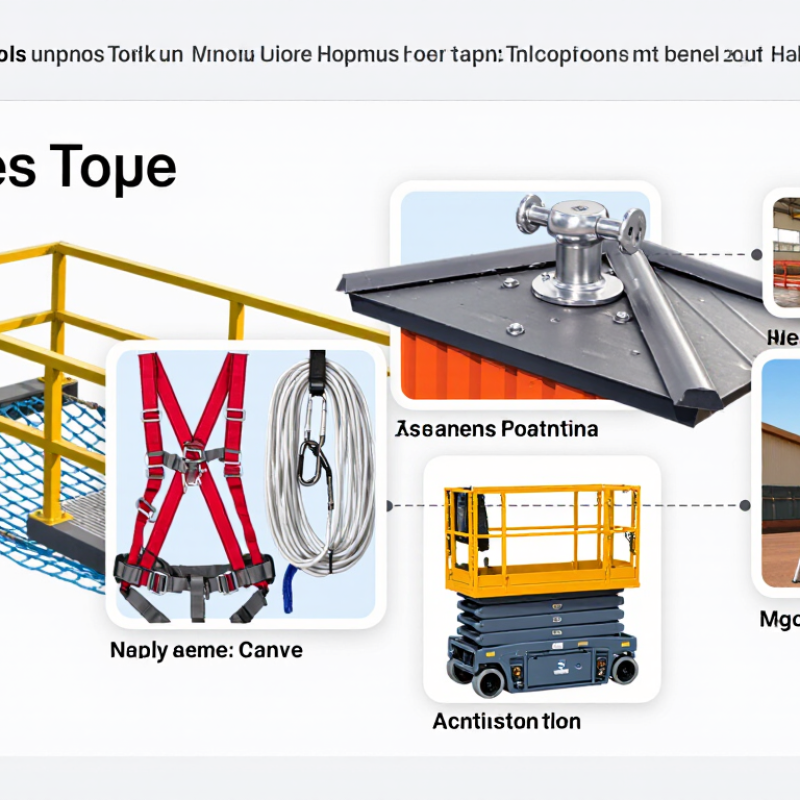
The chart shows the number of common work environments in which each equipment category is typically applied. The figures represent practical application coverage, not market share or sales data.

  • Guardrails: Provide passive edge protection for roofs, platforms, and elevated work areas.
  • Safety nets: Reduce the consequences of falls during structural construction and open-edge work.
  • Personal fall arrest systems: Connect workers to compatible anchorage, connectors, and body support equipment.
  • Self-retracting lifelines: Support mobility while limiting fall distance during maintenance and construction tasks.
  • Horizontal lifelines: Allow movement along roofs, bridges, and industrial structures while attached.
  • Anchorage connectors: Provide compatible attachment points for personal fall protection systems.

Equipment selection should be based on a site-specific risk assessment, system compatibility, clearance requirements, applicable standards, and local regulations.

How to Choose Equipment for Different Work Environments

Choosing fall prevention equipment starts with the work environment, not a catalogue. On a flat warehouse roof, temporary guardrails can protect several workers moving materials. Open edges need toe boards when tools or small parts could fall. Roof anchors and horizontal lifelines suit controlled routes, but a qualified person must verify the supporting structure.

Construction sites change daily. A full-body harness and energy-absorbing lanyard may fit steel erection. A self-retracting lifeline can reduce free-fall distance near an edge. Check swing-fall exposure, clearance below, and rescue access before selecting connectors. A harness is not a complete system. Fit matters. Components must work together, with documented training. Inspect webbing, stitching, hooks, and labels before every use. Remove damaged equipment immediately, rather than saving it for emergencies.

For maintenance platforms, towers, and fixed ladders, choose equipment that matches worker movement. A vertical lifeline supports climbing, while a ladder safety system may provide better control than a loose lanyard. Wet plants, dusty mills, and cold sites can affect grip, visibility, and material performance. Follow equipment instructions and applicable local requirements. Field reviews also expose weak assumptions: workers may bypass gates, clip onto unsuitable pipes, or reject bulky gear. Observe the task and ask the crew. A tidy plan can still fail.

Top Types of Fall Prevention Equipment for Global Buyers - How to Choose Equipment for Different Work Environments
Equipment Type Primary Hazard Addressed Best-Fit Work Environments Key Selection Criteria Main Benefits Important Limitations and Inspection Points Common Reference Standards
Guardrails and Edge Protection Falls from open edges, platforms, mezzanines, roofs, ramps and elevated walkways. Construction sites Factories Warehouses Roof work Select a system with compatible top rails, midrails, toe boards and posts. Confirm the required height, load capacity, edge geometry, corrosion resistance and attachment method. Use a counterweighted or clamped system where drilling is not permitted. Provides collective protection without requiring workers to wear or connect personal equipment during normal access. Check for loose fasteners, damaged rails, missing toe boards, excessive deflection, corrosion and inadequate anchorage. Do not use as a material storage barrier unless specifically designed for that load. OSHA 29 CFR 1910.29; OSHA 29 CFR 1926.502; EN 13374.
Personal Fall Arrest Systems Arrests a fall after a worker loses balance or steps beyond a protected edge. Steel erection Roof maintenance Towers Utility work Match the full-body harness, connecting device and anchorage. Check maximum user weight, required clearance, connection orientation, compatibility, work radius and rescue arrangements. Prefer systems that limit arrest forces and reduce swing-fall exposure. Suitable where guardrails or other collective protection cannot be installed or where workers need controlled mobility. Requires worker training, pre-use inspection and a documented rescue plan. A fall-arrest system must not be confused with a positioning or travel-restraint system. Remove equipment after a fall or when webbing, stitching, hardware or labels are damaged. OSHA 29 CFR 1910.140; OSHA 29 CFR 1926.502(d); ANSI/ASSP Z359 series; EN 361, EN 355 and EN 362.
Self-Retracting Lifelines Falls during movement near elevated edges, especially where long lanyards create clearance or swing-fall concerns. Roof edges Loading areas Aircraft maintenance Ladders Choose a cable or web model according to abrasion, heat, chemical and outdoor exposure. Verify allowable horizontal or leading-edge use, maximum arrest distance, connector type, lifeline length and anchorage position. Automatically pays out and retracts, helping reduce slack, trip hazards and potential fall distance. Not every model is approved for leading-edge or horizontal use. Inspect the energy absorber, housing, lifeline, snap hook and locking mechanism. Keep the device aligned with the approved anchorage direction. OSHA 29 CFR 1910.140; OSHA 29 CFR 1926.502(d); ANSI/ASSP Z359.14; EN 360.
Roof Walkways, Crossover Platforms and Skylight Protection Falls through fragile roof surfaces, skylights or unprotected roof areas, and slips while crossing obstacles. Industrial roofs Solar installations Commercial buildings Maintenance routes Confirm roof load capacity, surface compatibility, slope, weather exposure, walkway width, slip resistance, crossing height and required guardrails. Use covers or screens that are secured and clearly marked where skylights are present. Creates a defined, stable route and can reduce dependence on personal fall protection for routine access when properly designed. Must not overload fragile roofing. Inspect for corrosion, loose fixings, damaged grating, blocked drainage and degraded anti-slip surfaces. Temporary systems require regular repositioning and securement checks. OSHA 29 CFR 1910.28; OSHA 29 CFR 1926.502(i); applicable local roofing and structural requirements.
Safety Nets Reduces injury severity by catching workers or materials below elevated work areas. Bridge construction Large structures Steel erection Industrial construction Select mesh size, energy absorption, dimensions, support spacing and installation height based on the fall zone. Ensure the net extends sufficiently beyond the work area and is installed by competent personnel. Provides passive collective protection over broad areas where guardrails are impractical. Does not prevent a fall. Inspect before each work shift and after events that could affect integrity. Remove debris, maintain required clearance below the net and replace damaged sections according to the manufacturer’s instructions. OSHA 29 CFR 1926.502(c); EN 1263-1 and EN 1263-2.
Fixed Ladders with Cages or Vertical Lifelines Falls while climbing fixed vertical access routes on buildings, tanks, towers and industrial equipment. Tanks and silos Telecommunications Utility facilities Process plants Evaluate ladder height, climbing frequency, rest platforms, rung spacing, clearance, corrosion resistance and rescue access. For longer climbs, select a compatible vertical lifeline or guided-type fall arrester. Provides permanent access and can support controlled climbing when designed with appropriate fall protection. Cages alone do not necessarily prevent or arrest a fall. Inspect rungs, brackets, fasteners, welds, platforms, lifelines and clearances. Keep the climbing path free from obstructions, ice, oil and process hazards. OSHA 29 CFR 1910.23; OSHA 29 CFR 1910.28; EN ISO 14122-4; EN 353-1 and EN 353-2 where applicable.
Scaffolds and Mobile Access Towers Falls from temporary elevated working platforms and during access or relocation. Building construction Painting Maintenance Interior fit-out Check platform dimensions, duty rating, guardrails, toe boards, access ladders, base stability, caster locks, height-to-base ratio and suitability for uneven surfaces. Select components from one compatible system. Offers a relatively large, stable work platform for multiple workers and tools. Requires erection, alteration and inspection by competent personnel. Never move a mobile tower with people or unsecured materials on it. Control wind exposure, overhead hazards and unauthorized modifications. OSHA 29 CFR 1926 Subpart L; OSHA 29 CFR 1910.27; EN 1004; EN 12811-1.
Mobile Elevating Work Platforms Falls from powered platforms, especially during positioning, travel, boom movement or work near edges. Warehouses Facilities maintenance Construction Tree care Select the platform type, working height, rated capacity, outreach, terrain capability, indoor or outdoor rating, wind limit and power source. Confirm that the platform has guardrails and suitable anchor points where required. Provides adjustable access and a guarded work platform for tasks that cannot be completed safely from the ground. Operators require task-specific training. Inspect controls, emergency lowering, tires, outriggers, guardrails and alarms. Observe manufacturer limits for slope, wind, capacity and use near energized equipment. OSHA 29 CFR 1910.67; ANSI/SAIA A92 series; EN 280-1.
Stairways, Handrails and Temporary Access Steps Falls on stairs, steps, ramps and uneven transitions between working levels. Factories Warehouses Construction sites Public infrastructure Verify uniform riser and tread dimensions, stair width, handrail height, landing size, anti-slip performance, lighting and load rating. Select modular steps for frequent temporary access and fixed stairs for permanent routes. Reduces reliance on ladders and supports safer two-handed movement between levels. Inspect for wet or contaminated surfaces, damaged nosings, loose handrails, blocked landings and poor lighting. Avoid using stairs as storage areas or as a substitute for a properly designed scaffold. OSHA 29 CFR 1910.28; OSHA 29 CFR 1910.29; OSHA 29 CFR 1926.1052; EN ISO 14122-3.
Selection principle: Use collective protection such as guardrails, protected walkways, stairs and safety nets before relying on personal fall arrest equipment whenever the work environment allows. Final selection should be based on a site-specific risk assessment, local regulations, structural capacity, worker training and a practical rescue plan.

Global Safety Standards, Materials, and Product Requirements

Global fall prevention equipment must satisfy local standards, site conditions, and documented performance requirements. The ILO estimated 2.93 million work-related deaths worldwide in 2019, with occupational injuries remaining a major safety concern. Falls from height are preventable, but only when equipment matches the hazard.

Anchor devices often follow EN 795:2012 in Europe, while US buyers may reference OSHA 1910.140 and ANSI/ASSP Z359 requirements. These frameworks address strength, testing, labeling, and system compatibility.

A buyer should request current test reports, inspection instructions, batch traceability, and evidence from a competent testing laboratory.

A neat certificate is not enough.

The anchor, harness, lanyard, and connecting device must work as one system.

Material selection also matters. Galvanized steel suits many outdoor structures, while stainless steel performs better in coastal or corrosive environments.

Polyester webbing should resist abrasion, ultraviolet exposure, and moisture.

Aluminum components reduce weight, but they require careful inspection for deformation and surface damage.

The European Agency for Safety and Health at Work identifies falls from height as a persistent high-risk issue across construction activities.

In practice, packaging, language, storage life, and user training can decide whether compliant equipment performs correctly. Some buyers focus heavily on strength ratings and overlook rescue planning. That gap deserves honest review.

Inspection, Maintenance, Training, and Safe Equipment Use

Top Types of Fall Prevention Equipment for Global Buyers

Effective fall prevention starts with choosing the right control, not simply buying a harness. Guardrails, toe boards, safety nets, covers, travel-restraint systems, and personal fall-arrest equipment serve different risks. OSHA reported 395 construction fall fatalities among 1,069 deaths in 2022, making falls a leading construction hazard. HSE’s 2023/24 workplace statistics recorded 50 worker deaths from falls from height in Great Britain. These figures show why buyers must assess roof edges, fragile surfaces, ladders, platforms, and rescue access before selecting equipment.

Inspection should follow the manufacturer’s instructions and applicable local standards. A competent person should check webbing for cuts, stitching damage, chemical stains, distorted hooks, and expired components. Keep records. Small details matter. Maintenance includes cleaning, drying, controlled storage, and immediate removal of equipment exposed to a fall. Training must include fitting, anchor selection, swing-fall risks, emergency rescue, and realistic practice near the work area. A classroom certificate is not enough. Workers may still connect to an unsuitable anchor or wear loose straps. That uncomfortable gap deserves review. Buyers should also verify supplier documentation, test evidence, user capacity, compatibility, and replacement procedures. Equipment can reduce consequences, but planning should prioritize prevention and collective protection whenever reasonably practicable.