
Butterfly Pea Powder has moved from a niche botanical ingredient to a recognizable natural blue colorant. Beverage brands use it in teas, lemonades, smoothies, desserts, and functional drink mixes. Its vivid blue tone can shift toward purple when acidity changes. That visual response attracts consumers, but it also creates formulation challenges.
Recent natural food color reports from Grand View Research and Future Market Insights identify clean-label ingredients as a continuing market priority. Innova Market Insights has also reported strong consumer interest in natural, visually distinctive products. These reports describe broad category trends, not a guaranteed forecast for Butterfly Pea Powder. The distinction matters. Market data can be useful, but supplier evidence must guide purchasing decisions.
Quality starts upstream. This guide examines seven leading suppliers for global buyers, focusing on origin, processing methods, color strength, moisture control, and batch consistency. It also considers certificates of analysis, microbiological testing, pesticide screening, heavy-metal limits, and food-grade packaging. These details matter when powder travels through humid ports or remains in storage for several months. Codex food additive principles and destination-market requirements should support every sourcing decision. A supplier’s website is not enough. Proof beats promises.
No ranking is perfect. Different buyers may value organic certification, private labeling, low minimum orders, or stable annual contracts. Some suppliers communicate clearly but provide limited technical documentation. Others offer strong laboratory support but less flexible packaging. This comparison recognizes those gaps and encourages buyers to request current test reports, samples, traceability records, and written specifications before signing a contract.
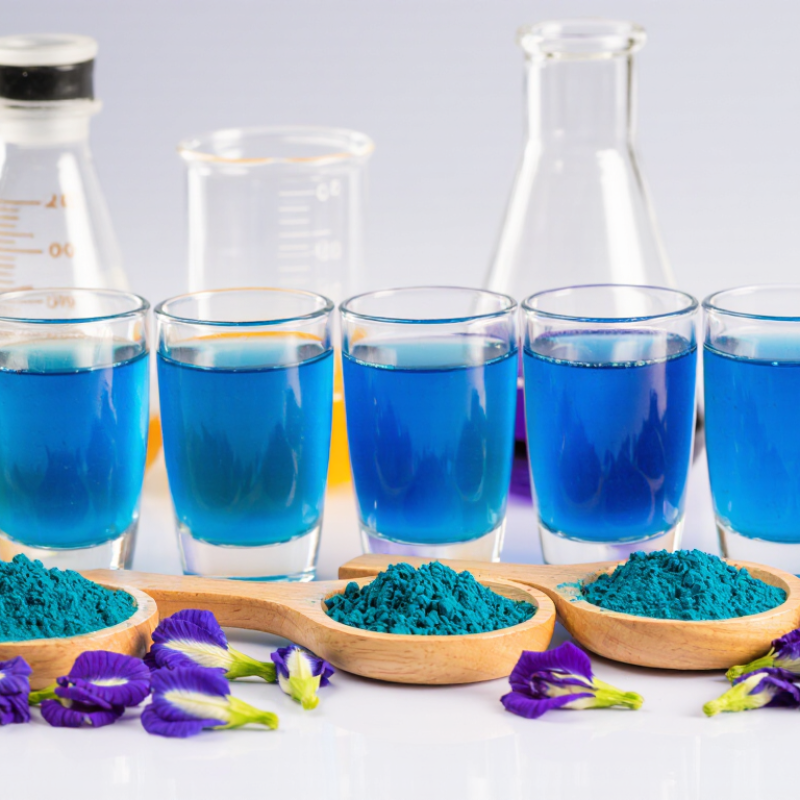
Butterfly pea powder is made from dried Clitoria ternatea flowers, usually milled into a fine blue powder. Its vivid color comes from anthocyanins called ternatins. These compounds can shift from blue to violet or pink when acidity changes. Lemon juice shows the effect clearly.
Global buyers use it in teas, drink mixes, bakery fillings, desserts, and natural color systems. It offers a plant-based alternative to synthetic blue shades. Grand View Research estimated the global natural food colors market at about USD 1.7 billion in 2023. Its report also forecasts continued growth through 2030. This wider trend explains rising interest in butterfly pea ingredients, although butterfly pea remains a specialized category. The market evidence is useful, but not perfect.
Tips: Ask suppliers for botanical identification, moisture results, microbial testing, heavy-metal screening, and pesticide documentation. Confirm whether the powder is food grade, spray-dried, or simply milled. Check the color value, mesh size, harvest season, and packaging barrier. A certificate alone is not enough. Review the test method and laboratory date.
Experienced buyers should request a representative sample before negotiating volume. Powder may look bright in a photograph but fade under heat, light, or oxygen. Research published in Food Chemistry has linked butterfly pea anthocyanins with strong color responsiveness, yet stability depends on pH and processing. That detail matters in export production. Some suppliers describe the powder as highly stable. I would treat that claim carefully. Ask for real application data, not only a polished specification sheet.
7 Best Butterfly Pea Powder Suppliers for Global Buyers
How to Evaluate Butterfly Pea Powder Suppliers Worldwide
Choosing a reliable butterfly pea powder supplier requires more than comparing prices. Check the botanical name, growing region, harvest season, and processing method. Ask for a recent certificate of analysis for every production batch. It should cover moisture, microbiological safety, heavy metals, and pesticide residues. A clear lot number should connect the test report to the shipped product. Traceability matters when several harvests look similar.
Request a small sample before placing a large order. Examine its color, aroma, texture, and solubility in cold water. Bright blue powder is useful, but color alone proves little. Experienced suppliers explain storage conditions, packaging materials, shelf life, and transport risks. They should also answer questions about allergen controls and food safety systems. Vague replies deserve caution. A polished website is not evidence of quality.
Tips: Compare at least three suppliers using the same checklist. Confirm whether testing is internal or performed by an independent laboratory. Review sample documents carefully, not just sales claims. Ask how damaged or inconsistent batches are handled. No checklist is flawless. Even careful buyers may overlook seasonal variation, so repeat testing can be worthwhile. Keep written records of samples, reports, and supplier responses. Consistent communication often reveals more than a low quotation.
| Rank | Anonymous Supplier Profile | Typical Source Region | Product Formats | Indicative MOQ | Typical Bulk Lead Time | Quality Evidence to Request | Packaging Options | Best Fit for Global Buyers |
|---|---|---|---|---|---|---|---|---|
| 1 | Profile A — Organic Botanical Processor High traceability | Thailand and neighboring Southeast Asian growing areas | Organic powder Conventional powder Cut flower | 25–100 kg for standard export orders | 3–6 weeks after artwork and payment approval | Batch COA, botanical identity, moisture, microbiological analysis, pesticide-screening report, and organic certificate when claimed | Food-grade kraft bags with inner liner; 5 kg, 10 kg, or 20–25 kg configurations | Natural-food brands requiring documented origin and organic supply-chain support |
| 2 | Profile B — Export-Focused Herbal Ingredient Manufacturer Balanced capability | Vietnam and other established Southeast Asian herb-processing regions | Standard powder Fine-mesh powder Private-label packs | 50–200 kg, depending on packaging and testing requirements | 4–8 weeks for regular production | Recent COA, heavy-metal testing, microbial limits, allergen statement, shelf-life data, and food-safety system documentation | Multiwall paper bags, foil-lined bags, or sealed pouches inside cartons | Importers seeking a practical balance between customization, documentation, and order volume |
| 3 | Profile C — Small-Batch Premium Powder Supplier Flexible sampling | Thailand, Vietnam, or regional specialty herb farms | Premium color grade Small-batch powder Sample packs | 5–25 kg for initial orders; larger volumes subject to capacity | 2–5 weeks, excluding laboratory testing | Retained sample, color specification, odor and appearance records, moisture result, microbial report, and lot identification | Resealable foil pouches, lined cartons, or small food-grade drums | Specialty beverage, culinary, and pilot-product buyers testing market acceptance |
| 4 | Profile D — High-Volume Agricultural Processor Scalable supply | Large agricultural production zones in Southeast Asia | Bulk powder Standardized batches Food-service packs | 200–500 kg for routine commercial production | 6–10 weeks during normal production cycles | Supplier questionnaire, traceability records, HACCP or equivalent food-safety documentation, batch COA, and contaminant testing | 20–25 kg lined bags, fiber drums, or palletized export cartons | Distributors, beverage manufacturers, and supplement companies with predictable recurring demand |
| 5 | Profile E — Contract Manufacturing Partner Customization focused | Southeast Asian ingredient-processing hubs | Powder blending Custom mesh size Retail-ready packs | 100–300 kg per specification or packaging format | 6–12 weeks for customized products | Approved specification sheet, pre-production sample, batch-release procedure, packaging compliance documents, and finished-product COA | Private-label sachets, stand-up pouches, jars, cartons, or bulk liners | Brands needing customized particle size, pack size, labeling, or blended formulations |
| 6 | Profile F — Certified Organic Supply Partner Certification dependent | Certified farms and processors in Thailand, Vietnam, or comparable growing regions | Certified organic powder Conventional option Traceable lots | 100–300 kg, often dependent on certified raw-material availability | 6–12 weeks, with additional time for certification review | Current organic certificate, transaction certificate where applicable, scope verification, pesticide analysis, microbial report, and traceability documentation | Certified-material packaging, lined bulk bags, or sealed export cartons | Organic retailers and importers whose claims require independently verifiable certification |
| 7 | Profile G — Regional Distributor with Consolidated Export Service Logistics convenient | Regional distribution centers supplied by multiple Asian processors | Ready-stock powder Mixed-SKU orders Trial quantities | 10–50 kg for stock items; higher for made-to-order products | 1–4 weeks for available stock; 6–10 weeks for replenishment | Lot-specific COA, original manufacturer information, country-of-origin statement, storage conditions, and import documentation | Small cartons, foil-lined pouches, drums, or mixed pallets | Small and medium importers prioritizing shorter purchasing cycles and consolidated shipments |
Evaluation note: MOQ, lead time, packaging, and documentation requirements are indicative international-buyer benchmarks rather than guarantees. Confirm current specifications, certifications, available inventory, Incoterms, and destination-country compliance before placing an order.
Seven Leading Butterfly Pea Powder Suppliers for Global Buyers
Global buyers evaluating seven leading butterfly pea powder suppliers should inspect more than color and price. Supplier experience shows in consistent blue-purple shades, fine texture, and clean aroma. A dependable supplier can explain the flower’s growing region, harvest season, drying method, and milling temperature. These details help buyers judge freshness and processing control.
Look closely at documentation. A professional supplier should provide a current certificate of analysis, botanical identification, moisture results, microbiological testing, and heavy metal screening. Pesticide information also matters for food and beverage applications. Export records, traceable batch numbers, and clear packaging specifications strengthen supplier reliability. Vacuum-packed inner bags and moisture-resistant cartons can protect powder during long ocean shipments.
The seven strongest supplier profiles often include farm-connected processors, specialist botanical exporters, certified organic wholesalers, and large ingredient distributors. Each type has different advantages. Farm-connected suppliers may offer better origin visibility. Large distributors may provide steadier stock and wider logistics support. Ask about minimum order quantities, sample policies, lead times, and storage conditions. Small samples reveal useful facts quickly. However, one sample cannot prove year-round consistency. Buyers should compare several batches when possible. Some suppliers communicate well but provide weak technical records, which deserves careful review before a purchase.
Choosing a butterfly pea powder supplier requires more than comparing prices. Start with botanical identity, origin, harvest season, and processing method. Ask for a current certificate of analysis for every production lot. It should show moisture, microbial limits, pesticide residues, heavy metals, and color strength. Small details matter. FAO’s 2023 food-loss report estimates that 13.2% of food is lost globally before retail. Reliable drying, sealed packaging, and stock rotation therefore deserve serious attention.
Request a retained sample and test it independently before placing a large order. Compare its blue tone, aroma, solubility, and performance in acidic drinks. Color can fade during storage, especially with heat, light, or moisture. The supplier should explain its packaging barrier, shelf-life evidence, and recommended warehouse conditions. Traceability is essential. Batch codes should connect the finished powder to farm records and production dates. WHO estimates that contaminated food causes about 600 million illnesses annually, so documented hygiene controls are not optional.
Import planning also needs practical verification. Check minimum order quantities, lead times, pallet dimensions, export documents, and agreed Incoterms. Use ITC Trade Map to review sourcing patterns and potential shipment volatility. A supplier may offer an attractive quotation, yet poor communication can create expensive delays. I would also test response quality with difficult questions. Vague answers are warning signs. My own caution is simple: one successful sample proves very little. Seasonal variation, inconsistent grinding, or delayed laboratory results can still appear later. Choose a partner willing to disclose limitations, correct mistakes, and support repeat testing.
