
Choosing a China-based Gold Silver Testing manufacturer requires more than comparing prices or polished factory photos. Buyers need evidence that the supplier can produce repeatable, traceable, and technically defensible results. A reliable manufacturer should explain its testing scope, equipment, calibration process, and quality controls in clear language.
Dr. Christopher Corti, a respected precious-metals specialist, has stated, “The accuracy of any assay depends on the quality and representativeness of the sample.” This principle matters when testing jewelry, bullion, ore, plating, or recycled materials. X-ray fluorescence can provide fast screening. Fire assay and ICP analysis may offer deeper confirmation for certain applications. The correct method depends on the material, expected purity, and required reporting standard.
Look for manufacturers with ISO/IEC 17025 accreditation, qualified analysts, controlled sampling procedures, and documented measurement uncertainty. Ask to see sample reports. Check whether the report identifies the method, test date, sample condition, and result tolerance. A serious supplier should also explain how instruments are calibrated and how disputed results are reviewed.
Do not trust every certificate immediately.
A factory may own advanced analyzers but lack consistent sample preparation. Another may promise same-day results without explaining limitations. That is a warning sign. My own evaluation would include a small trial order, independent verification, and direct technical questions before signing a long-term agreement. Choosing well means balancing speed, cost, accuracy, communication, and accountability—not chasing the lowest quotation.
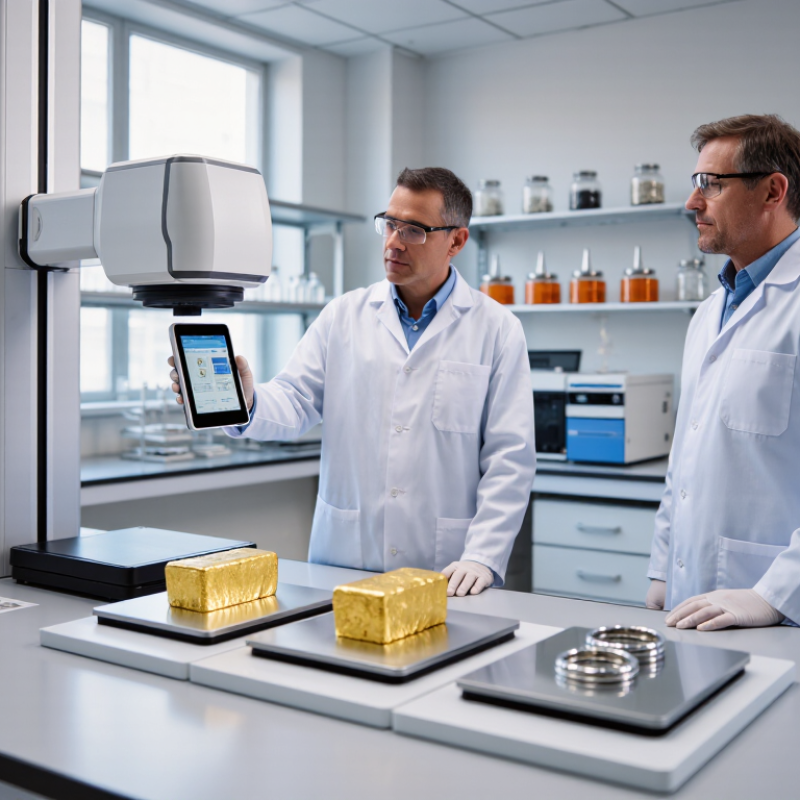
Choosing a top gold and silver testing manufacturer starts with a precise testing brief. Define alloy type, expected purity, sample size, test speed, and reporting format. A jewellery workshop may need non-destructive screening, while a refinery requires fire assay or instrumental confirmation. The method must match the material. ISO 11426 specifies cupellation for gold in jewellery alloys, while ISO/IEC 17025 supports laboratory competence and measurement reliability. Portable XRF is practical, but surface plating can distort results. I have seen clean-looking readings change after filing the sample.
Market demand makes dependable testing more important. The World Gold Council reported total gold demand of 4,974.5 tonnes in 2024, including over-the-counter demand. The Silver Institute recorded industrial silver demand of 654.4 million ounces in 2023. These volumes increase pressure on fast, traceable decisions. Ask manufacturers for calibration procedures, certified reference materials, uncertainty data, and repeatability results. A certificate alone is not enough.
Check whether the supplier can test gold karat grades, silver fineness, impurities, and coated products under controlled conditions. Request raw data, instrument software details, and maintenance records. The laboratory should explain detection limits in plain language. It should also separate screening from final acceptance testing. Some specifications may need revision after real samples arrive. That is not failure; it is useful evidence. A strong evaluation includes blind samples, duplicate measurements, temperature control, and an audit trail from sample receipt to final report.
China Top Gold Silver Testing Manufacturers: How to Choose?
Manufacturer expertise should match the metal, product form, and required decision. Gold bars, plated jewelry, and silver concentrates can produce different testing risks. ISO/IEC 17025 accreditation shows that a laboratory follows controlled methods and technical procedures. It does not automatically guarantee every result. Ask for the scope, measurement uncertainty, calibration records, and recent proficiency-testing results. Experienced technicians should explain matrix effects, sampling errors, and why one reading may need confirmation.
Equipment matters, but equipment alone is not expertise. X-ray fluorescence provides fast, non-destructive screening, while fire assay remains a widely recognized confirmation method for gold. For silver, laboratories may combine gravimetric, titration, or instrumental methods. The World Gold Council reported record annual gold demand of 4,974.5 tonnes in 2024, including over-the-counter demand. The Silver Institute reported industrial silver demand of about 680.5 million ounces in 2024. These volumes increase pressure for traceable, repeatable testing. Accuracy needs evidence.
Tips: Request duplicate samples and a signed chain-of-custody record. Compare the reported result with its uncertainty range. Check whether standards are traceable to national or international references. Ask how often instruments are verified. A polished report can still hide weak sampling. I have seen results change after better sample preparation. That is uncomfortable, but useful. Choose a manufacturer that admits limitations, documents deviations, and can reproduce a result from the same prepared sample.
| Evaluation Dimension | Recommended Verification | Strong Benchmark | Warning Signs | Weight |
|---|---|---|---|---|
| Laboratory accreditation | Request a current ISO/IEC 17025 certificate and confirm that the specific gold and silver methods are within its scope. | The laboratory has a valid scope covering the exact matrix, analyte, and test method required. | Only a general quality certificate is provided, or the requested test is outside the accredited scope. | 20% |
| Gold assay expertise | Ask whether the laboratory routinely tests bullion, doré, jewelry, recycled material, concentrates, or electronic scrap. | Demonstrated experience with heterogeneous precious-metal samples and documented sampling procedures. | Experience is limited to simple homogeneous samples or the laboratory cannot explain its sampling plan. | 12% |
| Silver assay expertise | Confirm capability for high-purity silver, alloys, plated materials, and samples containing copper, lead, zinc, or other interfering elements. | Method selection and interference correction are documented for the expected sample composition. | A single method is used for every sample type without matrix or interference assessment. | 10% |
| Primary analytical methods | Check whether the laboratory can select an appropriate method such as fire assay, gravimetric analysis, titration, XRF, ICP-OES, or ICP-MS. | Classical and instrumental methods are used according to material type, concentration range, and required uncertainty. | The provider promotes handheld or surface screening as a substitute for representative bulk analysis. | 15% |
| Equipment capability | Request an equipment list, maintenance records, calibration status, and information on sample-preparation facilities. | Suitable equipment is maintained and calibrated, with controlled digestion, fusion, cupellation, weighing, and measurement procedures. | No calibration records, unclear equipment ownership, or reliance on one instrument for all applications. | 10% |
| Testing accuracy and precision | Ask for method validation data, repeatability results, measurement uncertainty, and certified reference material performance. | Results include traceable uncertainty and are supported by quality-control charts, blanks, duplicates, spikes, or reference materials. | Only a single result is reported, with no uncertainty, repeatability, or quality-control evidence. | 15% |
| Proficiency testing | Request recent interlaboratory comparison or proficiency-testing participation relevant to gold and silver analysis. | Regular participation with satisfactory performance and documented corrective action when results fall outside limits. | No external comparison history or refusal to provide anonymized performance evidence. | 8% |
| Sampling and sample preparation | Review procedures for splitting, homogenizing, melting, pulverizing, digestion, and preventing contamination or segregation. | The laboratory explains how the test portion represents the submitted lot and retains a sealed reference portion. | The customer is asked to provide an unrepresentative fragment without written sampling instructions. | 5% |
| Reporting and traceability | Check whether reports identify the method, sample condition, units, result uncertainty, authorized reviewer, and chain of custody. | Reports are uniquely numbered, digitally verifiable, technically reviewed, and linked to complete sample records. | Reports omit the method, test conditions, uncertainty, or responsible technical signatory. | 3% |
| Turnaround and commercial terms | Compare routine and expedited lead times, retest policy, sample-return conditions, minimum quantity, and total cost. | The provider gives a written scope, fixed reporting timeline, transparent fees, and a defined dispute or retest process. | Unusually fast guarantees are offered without discussing sampling, method suitability, or quality controls. | 2% |
Choosing a gold or silver testing manufacturer requires more than comparing prices. Check whether its laboratory holds ISO/IEC 17025 accreditation. Review the exact accreditation scope, not only the certificate image. It should cover relevant methods, materials, and concentration ranges. Ask for recent calibration records and proficiency testing results. These details show technical competence and support reliable reports.
Laboratory capability matters in daily work. A strong facility may combine fire assay, XRF screening, and ICP analysis when suitable. Each method has limits. Request the detection range, measurement uncertainty, sample preparation process, and report format. A clear chain of custody is also important, especially when samples travel between facilities. A polished website can still hide weak documentation. I would not choose on price alone, although budget remains practical.
Ask for a sample report before signing. Confirm sample pickup options, testing locations, turnaround times, and support for international clients. Service coverage should include secure logistics, responsive communication, and help interpreting technical results. Check whether the laboratory can handle repeat testing when findings seem unusual. Do not accept vague promises. Compare written procedures, response quality, and evidence from previous projects. I once underestimated reporting speed; the laboratory was accurate, but delayed results disrupted purchasing decisions. Reliability includes both correct data and dependable delivery.
China Top Gold Silver Testing Manufacturers: How to Choose?
Price should be clear before any sample leaves your facility. Ask whether the quote includes preparation, testing, reporting, shipping, and tax. A cheap fee may exclude digestion, repeat tests, or certificate charges. Request a written quotation with currency, payment stages, and validity period. Compare similar methods, not only final prices. X-ray fluorescence may suit quick screening, while fire assay can provide deeper verification. The correct method depends on material, accuracy needs, and budget.
Turnaround time must match your production schedule. Ask for normal and urgent timelines. Confirm when the clock starts: sample arrival, payment, or registration. A reliable provider should explain delays caused by damaged samples, unusual alloys, or instrument maintenance. Check calibration records, method validation, measurement uncertainty, and relevant ISO/IEC 17025 capability where applicable. Documents matter. So does communication.
Sample handling reveals operational discipline. Each item should receive a unique code, photographed condition record, weight, and sealed storage location. Ask how staff prevent cross-contamination between gold, silver, plating, and mixed-metal samples. Confirm who may access the samples and how remaining material is returned or disposed of. Chain-of-custody forms are useful for expensive items. In practice, procedures are rarely perfect. A provider may promise fast reports but provide vague sample instructions. That weakness deserves attention. Test one small batch first, then review accuracy, response quality, and actual delivery time before expanding cooperation.
Choosing a China-based gold and silver testing manufacturer starts with your testing needs, not its catalog.
The World Gold Council reported 4,974.5 tonnes of total gold demand in 2024, including over-the-counter demand. The Silver Institute recorded industrial silver demand of about 680.5 million ounces that year. These volumes increase pressure for accurate, repeatable testing.
Define the material, required elements, sample size, and reporting format before requesting quotations. Ask whether the laboratory uses validated methods such as XRF, fire assay, or ICP-OES. Request detection limits, measurement uncertainty, calibration records, and a sample report. ISO/IEC 17025 accreditation is valuable, but the scope must cover your actual testing method. A certificate alone is not enough.
Practical details often decide reliability. Check sample sealing, chain-of-custody records, retest rules, data backups, and turnaround time. Ask how failed instruments are handled. Insist on certified reference materials and regular proficiency testing. The International Laboratory Accreditation Cooperation treats technical competence as central to laboratory confidence.
I would not choose only by price. A cheaper report becomes expensive when results cannot support purchasing, refining, or quality decisions.
One common mistake is requesting “metal purity testing” without defining acceptable uncertainty. That vague request can produce precise-looking numbers with limited business value. Ask for transparent communication, realistic delivery dates, and evidence that operators understand your material and decision risks.
