
How to Choose the Best Power Recliner Chair?
Choosing the best Power Recliner Chair requires more than admiring its soft upholstery. A chair may look impressive in a showroom, yet feel uncomfortable after an hour. Your height, weight, mobility, and room layout should guide the decision. Measure from the wall to the chair’s fully reclined position. Leave enough walking space around the footrest.
Comfort begins with support. Sit with your feet resting naturally on the floor before reclining. Your lower back should meet the lumbar cushion without forcing your shoulders forward. Check whether the headrest supports your neck and whether the seat edge presses behind your knees. Try every control slowly. A quiet motor, smooth movement, and easy-to-read buttons can make daily use safer and less frustrating.
Pay attention to construction and evidence. Look for a stable frame, durable fabric, weight ratings, and a clear warranty. Manufacturer specifications matter, but independent customer reviews reveal practical problems, such as noisy motors or weak remote controls. Ask whether replacement parts and service are available locally. Heat and massage features may seem attractive, but they should never replace proper posture support. Features are not always improvements.
A careful choice still involves uncertainty. Even experienced shoppers can misjudge comfort after a short test. If possible, test the chair for at least fifteen minutes, wearing ordinary clothing. Consider how you will enter, recline, and stand during a normal day. The best model is not necessarily the most expensive one. It is the chair that fits your body, space, routine, and long-term needs with dependable performance.
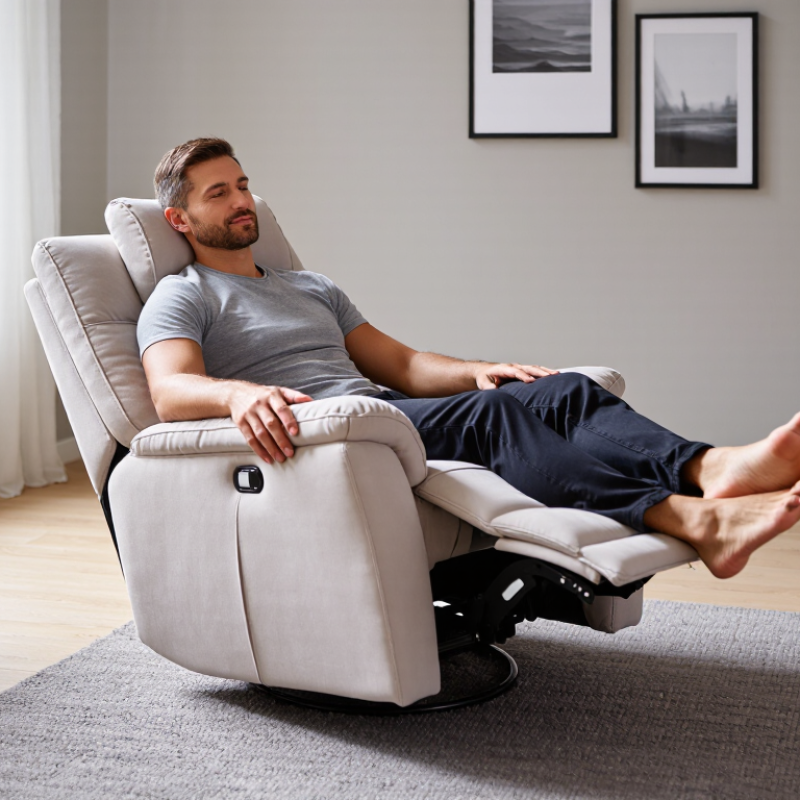
Define Your Comfort, Mobility, and Reclining Needs
Choosing the best power recliner chair starts with your body, not the upholstery. Measure your sitting height, hip width, and available floor space. Your knees should stay near a right angle, while both feet rest firmly on the floor. If your feet float, the chair may cause pressure behind your knees.
Think about mobility during ordinary moments. Can you reach the control without twisting your shoulder? Are the buttons large enough to identify by touch? People with weak grip or balance concerns may benefit from a power lift function, but the lifting speed should feel steady, not sudden. A qualified occupational therapist can help assess transfer safety when mobility is limited. I once chose a chair that looked supportive but had a low seat. Standing became harder than expected.
Your reclining needs deserve equal attention. Decide whether you want gentle back adjustment, elevated legs, or near-flat rest. Test each position for at least ten minutes. Notice pressure around your lower back, neck, and heels. Check the motor sound, cord placement, and whether a battery backup is available during outages. Easy-clean fabric matters when meals, pets, or daily use are involved. Do not rely only on showroom comfort. I underestimated how much a footrest changed my posture. Your ideal position may take several adjustments.
How to Choose the Best Power Recliner Chair? – Define Your Comfort, Mobility, and Reclining Needs
| Decision Dimension | What to Check | Practical Data or Typical Range | Best Choice for This Need | Priority |
|---|---|---|---|---|
| User Height | Seat depth, seat height, headrest position, and footrest length should support the user's body proportions. | Seat depth: approximately 19–22 in (48–56 cm); seat height: approximately 18–21 in (46–53 cm) | Choose a standard-size chair for average adults. Select a petite or tall-size model when the user's knees, lower back, or head are not properly supported. | High |
| Weight Capacity | Check the manufacturer's tested maximum user weight and leave a reasonable safety margin. | Common capacities: approximately 300–350 lb (136–159 kg); heavy-duty models may support more | Select a chair with a rated capacity comfortably above the user's weight, especially when the chair will be used frequently. | High |
| Reclining Positions | Determine whether the chair needs upright sitting, partial reclining, television viewing, reading, or near-flat rest. | Typical designs include 2-position, infinite-position, or independently adjustable backrest and footrest | Choose independent controls when the user wants precise adjustment of the backrest and leg support. | High |
| Lift Assistance | A lift function raises the seat gradually to help the user move from sitting to standing. | Lift systems are intended to assist standing; they are not a substitute for a medical lifting device. | Choose a power lift recliner for users with limited leg strength, balance concerns, or difficulty standing from a low seat. | High |
| Foot and Leg Support | Check whether the footrest supports the entire lower leg without pressing sharply behind the knees. | The footrest should extend smoothly and keep the legs comfortably supported without excessive knee pressure. | Choose an extended footrest or longer-seat design for taller users; choose a compact design for shorter users. | High |
| Head and Lumbar Support | Evaluate neck alignment, lower-back support, cushioning, and whether the support remains effective while reclined. | Adjustable headrests and lumbar sections can accommodate different sitting and reclining postures. | Choose independently adjustable headrest and lumbar support when the chair will be used for long periods each day. | High |
| Control System | Controls should be easy to see, reach, and operate without excessive hand strength. | Common features include wired remotes, side-mounted controls, USB charging ports, and memory buttons. | Choose large, clearly labeled buttons with tactile feedback. A wired remote is less likely to be misplaced than a wireless one. | Medium |
| Power Outage Protection | Consider whether the chair can return to an upright position during a temporary power interruption. | Some models include a battery backup compartment; backup performance depends on battery condition and chair usage. | Choose a model with compatible battery backup when the user may need reliable operation during outages. | Medium |
| Clearance and Room Layout | Measure the chair, fully reclined depth, doorway width, and space behind and beside the chair. | Wall-hugger designs may require only a small rear clearance, while conventional recliners need more space. | Choose a wall-hugger model for compact rooms. Confirm the delivery path before ordering. | High |
| Motor Noise and Movement | Check whether the movement is smooth, stable, and quiet enough for the intended room. | Dual-motor chairs generally allow more independent adjustment than single-motor chairs. | Choose a dual-motor design for customized positioning; choose a single-motor design when simple operation and lower complexity are preferred. | Medium |
| Upholstery and Cleaning | Consider breathability, stain resistance, durability, and the user's sensitivity to heat or friction. | Fabric is generally breathable; synthetic leather is usually easier to wipe clean; upholstery performance varies by material and construction. | Choose breathable fabric for warm environments and easy-clean upholstery for households with children, pets, or frequent spills. | Medium |
| Cushion Firmness | Firmness affects ease of standing, pressure distribution, and long-session comfort. | Medium-firm cushions usually provide a balance between support and pressure relief. | Choose firmer cushioning for easier transfers and stronger support; choose softer cushioning only when it does not make standing difficult. | High |
| Transfer Safety | Look for a stable base, supportive armrests, controlled lift movement, and a seat height that does not require deep squatting. | The chair should remain stable during sitting, reclining, rising, and returning to an upright position. | Choose a lift recliner with firm armrests and a gradual lift cycle for users who need transfer assistance. | High |
| Maintenance and Warranty | Review motor access, replacement-part availability, cleaning instructions, and warranty coverage. | Power recliners contain electrical and mechanical components that may require service over time. | Choose a model with clear care instructions, accessible support, and documented coverage for the frame, motor, and controls. | Medium |
Measurement reminder: Before purchasing, measure the user's height, hip width, seat-to-knee length, doorway width, and available floor space. Product specifications vary by model, so always verify the final dimensions and weight capacity.